In short
- C&I rooftop in India runs ₹35,000-50,000 per kW installed; larger and simpler sites sit lower
- The tariff you displace moves payback more than the price per kW does
- Value units below the all-in tariff — fixed and demand charges continue regardless
- A proposal that does not state its yield, unit value and cost per kW cannot be verified
Where the range comes from
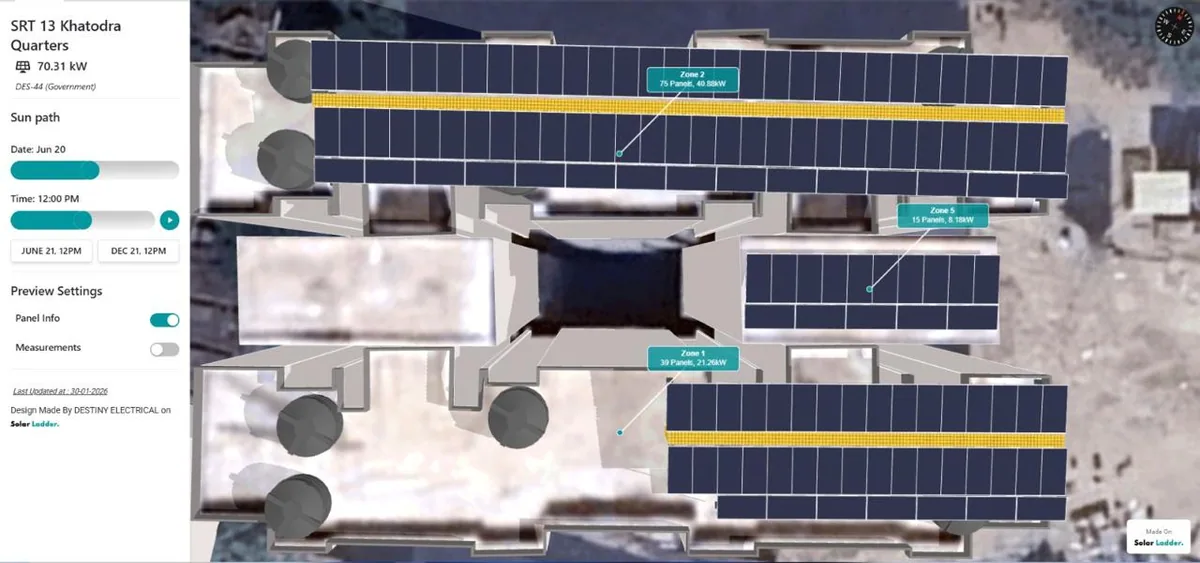
Larger arrays sit at the lower end. Fixed costs — mobilisation, design, approvals, the inverter room — spread across more kW, and procurement improves. A multi-megawatt ground or roof plant can approach the bottom of the band; a 50 kW rooftop on a difficult structure will sit near the top.
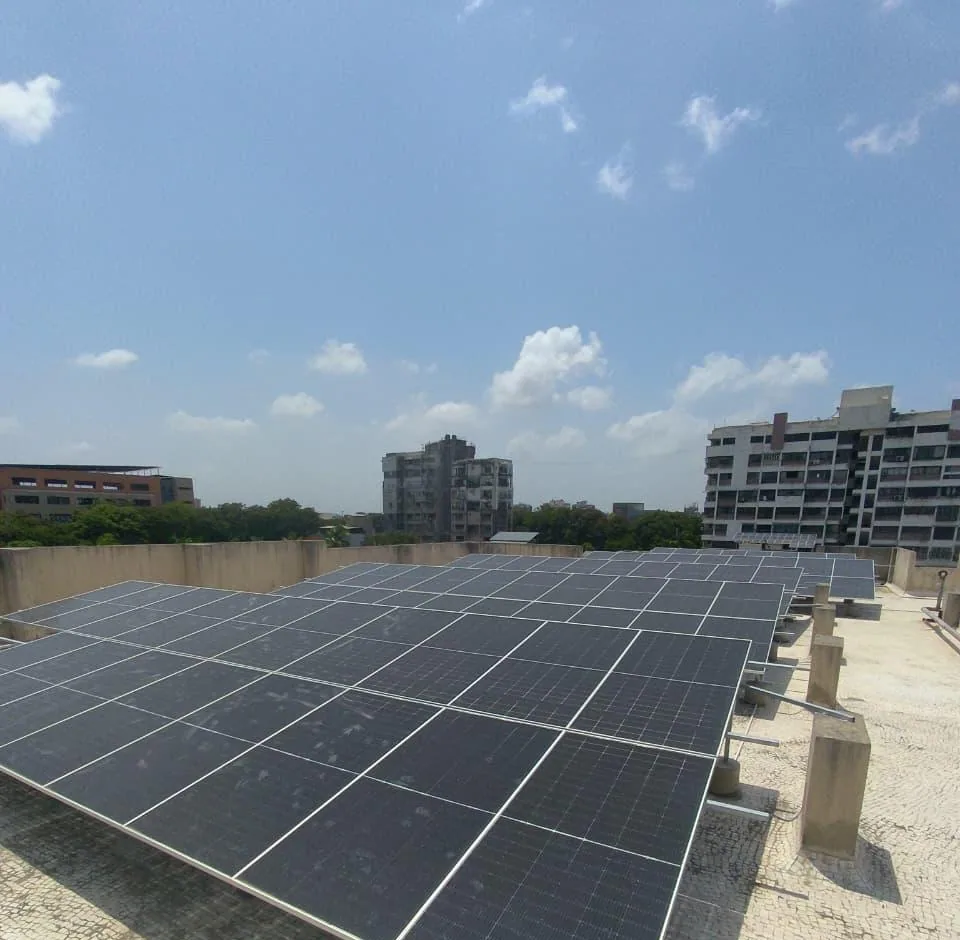
Roof type moves it as much as size. A clean RCC slab with good access is straightforward. A sheet roof needing purlin reinforcement, or a site where every component is craned over a live production hall, carries real cost that has nothing to do with the modules.
The tariff you pay matters more than the price you pay
Payback is capital cost divided by annual value displaced. Buyers spend most of their attention on the numerator and almost none on the denominator, which is the wrong way round, because the denominator varies more.
A commercial consumer in Gujarat paying an all-in effective rate near ₹10 a unit recovers far faster than an industrial consumer at ₹8, on an identical plant. Where a business pays ₹15 to ₹20 a unit, published analysis suggests recovery can fall to 12 to 18 months. The plant did not change; the tariff did.
Value the units conservatively
A common error in vendor proposals is to value every generated unit at the full all-in tariff. Solar offsets the energy component of your bill. Fixed charges and demand charges keep running whatever the roof produces, and on an industrial connection those are not small.
We model displaced value below the all-in rate for this reason. It produces a longer payback on paper than a competitor quoting the full tariff, and it is the number that survives contact with your first year of actual bills.
The four variables that decide your number
Sizing the plant to daytime load rather than to annual consumption is the single biggest lever. A plant sized to consumption will export heavily at midday and rely on the export arrangement for value; a plant sized to daytime load displaces units at retail rate, which is worth more.
- Your effective tariff per unit, including fuel surcharge and duty
- How much of your load runs during generating hours
- Roof type and structural work needed, which moves cost per kW
- Tax position, principally 40% first-year depreciation and GST input credit
What a credible proposal looks like
It states the yield assumption in units per kWp per day, the value assumed for a displaced unit, and the capital cost per kW. If any of those three are missing, the payback figure cannot be checked and should not be relied on.
It should also decline to give a final payback before a site visit. Roof condition, shading, cable route and the connection point can each move the number by a year, and none of them can be assessed from a bill.
Questions we are asked about this
What does commercial solar cost per kW in India?
Installed cost for commercial and industrial rooftop generally falls between ₹35,000 and ₹50,000 per kW. Larger arrays and simpler roof structures sit toward the lower end; small arrays and roofs needing structural work sit higher.
What is a realistic payback for a commercial solar plant?
Published analysis puts commercial payback around 3 to 4 years and post-tax industrial CAPEX payback around 2.5 to 3.5 years. Your figure depends principally on your effective tariff and how much load runs in generating hours.
Why does one vendor quote a shorter payback than another for the same roof?
Usually because of assumptions rather than engineering. Valuing every unit at the full all-in tariff, assuming a higher yield, or omitting structural work will all shorten a payback on paper. Compare the stated assumptions, not the headline figure.
Does a bigger system always pay back faster?
Not always. Cost per kW falls with size, but if the extra capacity generates when your load is low, those units are exported rather than displacing retail-rate consumption, and they are worth less.
Work out what this means for your site
The calculator gives a first capacity range from one bill. A survey turns that into something you can put in a business case.